
Coxswain Course – Brisbane

Coxswain Grade 1 Near Coastal

ECA Maritime College is an Australian Maritime College for Australian Mariners, we are located in Brisbane and 2020 in WA.

Qualification Description

Coxswain Grade 1 Near coastal at ECA Maritime College is for people working in the maritime industry seeking an Australian Maritime Safety Authority (AMSA) certificate of competency to command and operate the engines of a vessel:

  • <12 m in length
  • with propulsion power that is unlimited for an outboard engine or <500 kW for an inboard engine
  • that is in inshore waters or designated waters

or
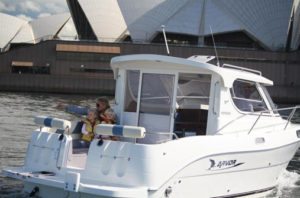
Coxswain

Coxswain

  • as a tender or auxiliary vessel within 3 nautical miles (nm) of a parent vessel within the exclusive economic zone (EEZ).

Licensing/Regulatory Information

This qualification is required to obtain an AMSA certificate of competency as a Coxswain Grade 1 NC as defined in the National Standard for Commercial Vessels (NSCV) Part D.

AMSA certification will require:

  • achieving MAR20318 Certificate II in Maritime Operations (Coxswain Grade 1 Near Coastal)
  • a Marine Radio Operators VHF Certificate of Proficiency
  • sea service consisting of:
  • 30 days qualifying sea service and a completed AMSA approved task book;

or

  • 240 days qualifying sea service
    • meeting the medical and eyesight requirements specified in the NSCV Part D and
    • assessment by an AMSA approved assessor using the AMSA mandated practical assessment (AMPA) conducted on a commercial vessel ≥5.0 m in length.

Classroom sessions –

In-class courses run 6 days a week including Saturdays with classes starting at 0800 and finishing at 1600. We do not move any quicker than any one group can work and while we have allocated course durations for all in-class courses, depending on the group, it may be completed sooner. It is your responsibility to complete your assignments once the course has finished should you not have time during the course to complete them all.  If you cannot attend a scheduled session, you are required to advise us as soon as possible and arrange to catch up in your own time.  As part of the maritime training package curriculum, each course holds a practical assessment component and students must attend our Brisbane Campus to complete this. In-class students will complete the mandatory practical assessment whilst at the college during the course.

Practicals can be completed offsite for Corporate Clients or groups of 8 or more, provided all the resources required have been audited and approved.

Remote / Flexible –

If you do not have time to attend classes you can study remotely.  When you have enrolled and paid your course deposit, you will be given access to your student portal which holds all of the course content and assignments. Your assignments can be submitted to your designated assessor and feedback received through the same system. Remote students are given 10 contact hours with their designated assessor to assist them through this process should they need it, and further assistance is available for students when necessary. Once Remote students have complete all of their assignments, they will need to contact ECA Maritime College to organise a time to sit their written exams.  As part of the maritime training package curriculum, each course holds a practical assessment component and students must attend our Brisbane Campus to complete this. ECA Maritime College is unable to issue a certificate without ALL components of the curriculum being satisfied, this includes the practical assessment. ECA Maritime College offers the practical assessment and AMPA completion as a collaborative day, however students who are choosing to not complete their AMPA with us will still need to satisfy the practical assessment component.
Online / Virtual Classrooms –

Live interactive Virtual Classrooms sessions are run similarly to the classroom sessions via Zoom Meeting. These are run 6 days a week including Saturdays, with sessions starting at 0800 and finishing at 1600 for the duration of the course. We do not move any quicker than any one group can work and while we have allocated course durations for all in-class courses, depending on the group, it may be completed sooner.  It is your responsibility to complete your assignments once the course has finished should you not have time during the course to complete them all.  If you cannot attend a scheduled session, you are required to advise us as soon as possible and arrange to catch up in your own time.  As part of the maritime training package curriculum, each course holds a practical assessment component and students must attend our Brisbane Campus to complete this. ECA Maritime College is unable to issue a certificate without ALL components of the curriculum being satisfied, this includes the practical assessment. ECA Maritime College offers the practical assessment and AMPA completion as a collaborative day, however students who are choosing to not complete their AMPA with us will still need to satisfy the practical assessment component.

ENROLL NOW

MED 3 Course Brisbane

MED 3 – MARINE ENGINE DRIVER GRADE 3 NCMarine Engine Driver Grade 3 - MED 3

Qualification Description

MED 3 is for people working in the maritime industry as;

  • chief engineer on vessels with an inboard engine with propulsion power <500 kW within the exclusive economic zone (EEZ) or
  • second engineer on vessels with an inboard engine with propulsion power <750 kW within the EEZ or
  • chief or second engineer on vessels with an outboard engine with unlimited propulsion power within the EEZ or
  • assistant under direct supervision of a chief engineer or
  • worker in the engine room of vessels <80 m long with propulsion power <3000 kW.

Licensing/Regulatory Information

AMSA certification will require:

  • achieving MAR20418 Certificate II in Maritime Operations (Marine Engine Driver Grade 3 Near Coastal)
  • sea service consisting of:
  • 20 days qualifying sea service and a completed AMSA approved task book

or

  • 60 days qualifying sea service
  • meeting the medical and eyesight requirements specified in the NSCV Part D and
  • assessment by an AMSA approved assessor using the AMSA mandated practical assessment (AMPA).

The candidate must be 16 years when the certificate is issued.

PREREQUISITES CHECKLIST

  • Record of Sea Service (AMSA form 560) or
  • Record of Sea Service to meet standard, signed by a qualified person;
  • Declaration of Medical Fitness for a Marine Qualification (AMSA form 558);
  • Eyesight test certificate (AMSA form 542);
  • Proof of Identity;
  • Photographs (2);
  • Certificate 2 Marine Engine Driver Grade 3 (NC) issued by an AMSA approved registered training organisation (RTO);
  • HLTFA unit of competency Apply first aid or another certificate that the national regulator considers to be equivalent;
  • Application for a Certificate of Competency – first time issue (AMSA form 534);
  • Pay fee/s.

DURATION

Classroom – 7 DAYS + Sea Time

Remote / Flexible – 12 months from enrolment date

DELIVERY METHODS

Classroom sessions –

In-class courses run 6 days a week including Saturdays with classes starting at 0800 and finishing at 1600. We do not move any quicker than any one group can work and while we have allocated course durations for all in-class courses, depending on the group, it may be completed sooner. It is your responsibility to complete your assignments once the course has finished should you not have time during the course to complete them all.  If you cannot attend a scheduled session, you are required to advise us as soon as possible and arrange to catch up in your own time.  As part of the maritime training package curriculum, each course holds a practical assessment component and students must attend our Brisbane Campus to complete this. In-class students will complete the mandatory practical assessment whilst at the college during the course.

Practicals can be completed offsite for Corporate Clients or groups of 8 or more, provided all the resources required have been audited and approved.

Remote / Flexible –

If you do not have time to attend classes you can study remotely.  When you have enrolled and paid your course deposit, you will be given access to your student portal which holds all of the course content and assignments. Your assignments can be submitted to your designated assessor and feedback received through the same system. Remote students are given 10 contact hours with their designated assessor to assist them through this process should they need it, and further assistance is available for students when necessary. Once Remote students have complete all of their assignments, they will need to contact ECA Maritime College to organise a time to sit their written exams.  As part of the maritime training package curriculum, each course holds a practical assessment component and students must attend our Brisbane Campus to complete this. ECA Maritime College is unable to issue a certificate without ALL components of the curriculum being satisfied, this includes the practical assessment. ECA Maritime College offers the practical assessment and AMPA completion as a collaborative day, however students who are choosing to not complete their AMPA with us will still need to satisfy the practical assessment component.
Online / Virtual Classrooms –

Live interactive Virtual Classrooms sessions are run similarly to the classroom sessions via Zoom Meeting. These are run 6 days a week including Saturdays, with sessions starting at 0800 and finishing at 1600 for the duration of the course. We do not move any quicker than any one group can work and while we have allocated course durations for all in-class courses, depending on the group, it may be completed sooner.  It is your responsibility to complete your assignments once the course has finished should you not have time during the course to complete them all.  If you cannot attend a scheduled session, you are required to advise us as soon as possible and arrange to catch up in your own time.  As part of the maritime training package curriculum, each course holds a practical assessment component and students must attend our Brisbane Campus to complete this. ECA Maritime College is unable to issue a certificate without ALL components of the curriculum being satisfied, this includes the practical assessment. ECA Maritime College offers the practical assessment and AMPA completion as a collaborative day, however students who are choosing to not complete their AMPA with us will still need to satisfy the practical assessment component.
MODULES INCLUDE

BSBWOR203 – Work effectively with others

MARB028 – Service marine internal combustion engines, and propulsion and auxiliary systems

MARC033 – Complete engine room tasks

MARC034 – Maintain hull out of water

MARC035 – Operate and maintain extra low and low voltage electrical systems and equipment

MARC036 – Operate deck machinery

MARC039 – Operate marine internal combustion engines, and propulsion and auxiliary systems

MARF027 – Apply basic survival skills in the event of vessel abandonment

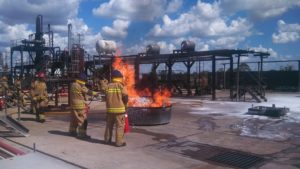
MARF028 – Follow procedures to minimise and fight fires on board a vessel

MARF029 – Meet work health and safety requirements

MARF030 – Survive at sea using survival craft

MARJ006 – Follow environmental work practices

ENTRY REQUIREMENTS

There are no entry requirements for this course except you will need to meet the AMSA requirements to convert your certificate to a licence including a certain amount of commercially logged sea time.

MED 2 – Marine Engine Driver Grade 2 Near Coastal

Marine Engine Driver Grade 2 – MED 2 Course information

Marine Engine Driver Grade 2 - MED 2

Description

This qualification applies to people working in maritime industry seeking an Australian Maritime
Safety Authority (AMSA) certificate of competency in the capacity of:

  • chief engineer on vessels with an inboard engine with propulsion power <750 kW within the
    exclusive economic zone (EEZ) or
  • second engineer on vessels with an inboard engine with propulsion power <1500 kW within
    the EEZ or
  • chief or second engineer on vessels with an outboard engine with unlimited propulsion power
    within the EEZ or
  • assistant under direct supervision of a chief engineer or
  • worker in an engine room of a vessel <80 m long with propulsion power <3000 kW.

Licensing/Regulatory Information

This qualification is required to obtain an AMSA certification as a Marine Engine Driver Grade 2 Near Coastal NC as defined in the National Standard for Commercial Vessels (NSCV) Part D.

AMSA certification will require:

  • achieving MAR30818 Certificate III in Maritime Operations (Marine Engine Driver Grade 2 NC

sea service consisting of:

  • 180 days qualifying sea service and a completed AMSA approved task book
    or
  • 360 days qualifying sea service
    or
  • 120 days qualifying sea service and a completed AMSA approved task book, while holding a Coxswain 1 (Cox 1), Coxswain 2 endorsed for 500 kW inboard propulsion (Cox  2 500 kW), or Marine Engine Driver Grade 3 (MED 3)
    or
  • 240 days qualifying sea service while holding a Cox 1, Cox 2 500 kW or MED 3
    or
  • 90 days qualifying sea service and a completed AMSA approved task book while holding a workshop skill equivalent qualification

SUBJECTS PRE-REQUISITE AND AN ADDITIONAL COURSE

You will need to have the prerequisite completed prior to receiving a full certificate as per the Training Package Rules.

  • MARF028 Follow procedures to minimise and fight fires on board a vessel
  • MARF029 Meet work health and safety requirements
  • MARF030 Survive at sea using survival craft
  • MARF027 Apply basic survival skills in the event of vessel abandonment

Subjects Covered in the MED 2 course 16 core units

  • BSBWOR203 Work effectively with others
  • MARB031 Maintain marine internal combustion engines, propulsion plant and auxiliary
    systems
  • MARB032 Undertake basic maintenance of electrical systems
  • MARC033 Complete engine room tasks
  • MARC034 Maintain hull out of water
  • MARC035 Operate and maintain extra low and low voltage electrical systems and
    equipment
  • MARC036 Operate deck machinery
  • MARC039 Operate marine internal combustion engines, and propulsion and auxiliary
    systems
  • MARC040 Manage fuel systems
  • MARC041 Operate and monitor marine internal combustion engines, propulsion plant
    and auxiliary systems
  • MARC042 Operate electrical systems
  • MARJ006 Follow environmental work practices

COURSE STRUCTURE

Classroom sessions –

In-class courses run 6 days a week including Saturdays with classes starting at 0800 and finishing at 1600. We do not move any quicker than any one group can work and while we have allocated course durations for all in-class courses, depending on the group, it may be completed sooner. It is your responsibility to complete your assignments once the course has finished should you not have time during the course to complete them all.  If you cannot attend a scheduled session, you are required to advise us as soon as possible and arrange to catch up in your own time.  As part of the maritime training package curriculum, each course holds a practical assessment component and students must attend our Brisbane Campus to complete this. In-class students will complete the mandatory practical assessment whilst at the college during the course.

Practicals can be completed offsite for Corporate Clients or groups of 8 or more, provided all the resources required have been audited and approved.

Remote / Flexible –

If you do not have time to attend classes you can study remotely.  When you have enrolled and paid your course deposit, you will be given access to your student portal which holds all of the course content and assignments. Your assignments can be submitted to your designated assessor and feedback received through the same system. Remote students are given 10 contact hours with their designated assessor to assist them through this process should they need it, and further assistance is available for students when necessary. Once Remote students have complete all of their assignments, they will need to contact ECA Maritime College to organise a time to sit their written exams.  As part of the maritime training package curriculum, each course holds a practical assessment component and students must attend our Brisbane Campus to complete this. ECA Maritime College is unable to issue a certificate without ALL components of the curriculum being satisfied, this includes the practical assessment. ECA Maritime College offers the practical assessment and AMPA completion as a collaborative day, however students who are choosing to not complete their AMPA with us will still need to satisfy the practical assessment component.
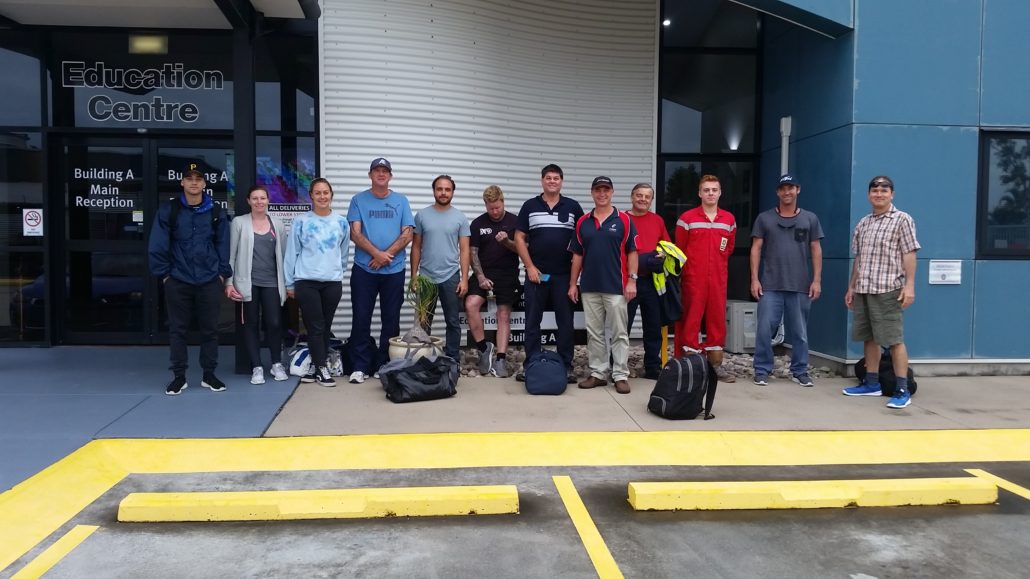
Online / Virtual Classrooms –

Live interactive Virtual Classrooms sessions are run similarly to the classroom sessions via Zoom Meeting. These are run 6 days a week including Saturdays, with sessions starting at 0800 and finishing at 1600 for the duration of the course. We do not move any quicker than any one group can work and while we have allocated course durations for all in-class courses, depending on the group, it may be completed sooner.  It is your responsibility to complete your assignments once the course has finished should you not have time during the course to complete them all.  If you cannot attend a scheduled session, you are required to advise us as soon as possible and arrange to catch up in your own time.  As part of the maritime training package curriculum, each course holds a practical assessment component and students must attend our Brisbane Campus to complete this. ECA Maritime College is unable to issue a certificate without ALL components of the curriculum being satisfied, this includes the practical assessment. ECA Maritime College offers the practical assessment and AMPA completion as a collaborative day, however students who are choosing to not complete their AMPA with us will still need to satisfy the practical assessment component.
The trainers want to assist throughout this process and can be accessed via the Student Portal.

ENROL NOW

Obtaining A Maritime Licence

Obtaining A Maritime Licence

Many of our inquiries are from people who are new to the Australian Domestic vessels and the marine industry who find it difficult locating the correct information required to gain a marine licence. While there is a lot of information out there, putting it together can be a mind field. So we decided to write this post to assist new comers and any one interested in the marine industry in a bid to simplify the process. 

Firstly we would ask you, “What do you want to do with your licence?”

Danial Thain

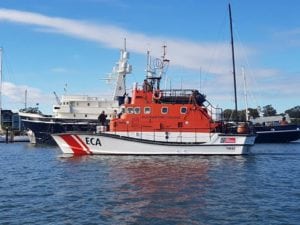
DT is ECA Maritime College’s Training Vessel

If you want to work overseas then completing the Near Coastal courses and licences will not be the best option, if you want to work on Australian vessels then the Australian Maritime Safety Authority (AMSA) endorsed courses would be the course for you.

Secondly, “Have you got any sea time on board commercially registered vessels?

For most of the Australian Commercial courses you will require a certain amount of sea time to convert your certificate you get from the college you attend to a licence to drive a boat. AMSA have a full list of these requirements on their website or you can contact our office and request a copy of the student handbook relevant to the course you wish to do. We have included all the AMSA documents in this publication to assist you in receiving all the information you require to make an informed decision as to the course you can achieve.

Thirdly, “Would you meet the AMSA medical requirements?”

Depending on which course you do as to the requirements. If you are colour blind for instance you may only be able to receive a restricted to day light sailing only. We always suggest once you have decided on the course that best suits your needs to read thoroughly through the AMSA requirements so you do not have any little surprises when you wish to convert your certificate to a licence.

There are four parts to completing this process.
1. Check your sea time is appropriate to the licence you want to achieve and could be verified by AMSA
2. Meet any additional medical or licence requirements for AMSA
3. Complete an AMSA approved course
4. Successfully complete either your AMSA Mandatory Practical Assessment or your final oral exam with AMSA to gain your licence.

We hope this information helps you and would welcome your inquiry to assist you in this process. Contact Us if you have any questions.

Certificate of Safety Training AMSA Approved – Brisbane

The STCW 10 replaces the old STCW 95

The STCW 10 or STCW 95 is a certificate of sea safety training and the minimum requirement for anyone who would like to work on vessels all around the world. Students will learn all the safety requirements on board a vessel. You will learn all about Social Responsibility, Fighting fires on board, Survival Techniques and Security. This course runs for 8 consecutive days and attendance is mandatory as per the International Maritime Organisation.

STCW 10

Personal Safety and Social Responsibilities

(STCW Reg VI/1 and Code Section A-V1/1, Table A-VI/1-4)
MARF006 Observe personal safety and social responsibility is similar to the IMO module listed above.
The subject and content are based on the IMO Model Course 1.21 Personal Safety and Social Responsibilities (PSSR).

Fire Prevention and Fire Fighting

(STCW RegVI/1 and Code Section A-V1/1, Table A-VI/1-2)
MARF008 Prevent and fight fires on board a vessel is similar to the IMO module listed above.
This subject aims to provide the training for candidates in fire prevention and fire fighting in accordance with Section A-VI/1 of the STCW Code.

Personal Survival Techniques

(STCW Reg VI/1 and Code Section A-V1/1, Table A-VI/1-1)
MARF009 Survive at sea in the event of vessel abandonment is similar to the IMO module listed above.

(Ref: Page 4 of the IMO Model Course 1.19)

Security Awareness Training

(STCW Reg VI/6 and Code Section A-VI/6, Table A-VI/6-1)
MARF003 Follow vessel security procedures is similar to the IMO module listed above.

If you are interested in enrolling please complete our online enrolment form or call us to discuss your options on 07 3390 4443

Danial Thain

New Training Vessel for ECA Maritime College

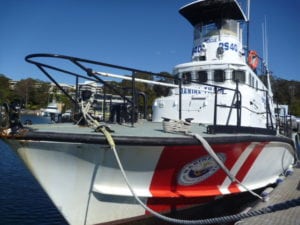
Spirit of Tayside / Danial Thain, she served on the cold and grey waters of the River Tay for more than 20 years. She now serves all future Australian Mariners as ECA Maritime College Training Vessel.

Now, after saving dozens of lives and playing a crucial role in the RNLI’s operations in the North Sea, a former Broughty Ferry lifeboat is finally getting to enjoy a well-earned retirement 9,000 miles away Down Under.

The Arun-class Spirit of Tayside, now known as the Daniel Thain, originally came to Dundee in 1978 and spent more than 20 years serving the people of the north east.

From there she went to Port Stephens, a small town 150 miles north of Sydney, where hot, sunny days are more frequent than cold, rainy ones and rescuing a stranded surfer will be more likely than saving stricken fishermen.
But having spent about 15 years in more exotic climes, it looks like almost 40 years of service will soon come to an end.

Dave Martin, operations manager at the Broughty Ferry station, said: “She has been very busy in Australia, but I’ve heard that she may finally be going into retirement.”

He told the Tele that “she was a really great boat,” but things weren’t always smooth sailing.

“Shortly after entering service the boat was knocked over twice on the way to St Andrews Bay,” said Mr Martin.

“There were a few people hurt, but this didn’t put people off. We knew she was a really sturdy boat, that was safe and could go anywhere.”

John Jack, who was a former coxswain on the boat, also recalled the times the boat was knocked over.

He said: “These boats can’t capsize but on one occasion we were as far over as we could go.

“The second coxswain broke his ankle.

“I ended up in plaster too and we thought we lost someone, but in the end, thankfully, everyone was fine.

“That one bad incident can’t take away the fact she was a very good boat.”

Mr Jack said the boat was regularly in service and attended a wide variety of call-outs.

“She would tend to deal with pleasure boats, but commercial vehicles weren’t unheard of too,” said Mr Jack.

“A few times we had to search for aircraft that came down from Leuchars and on one occasion I remember she was used to recover a pilot’s body.”

As one of the first Arun-class lifeboats to come to the station, The Spirit of Tayside was eventually replaced by a new 1.2 million vessel named Elizabeth of Glamis, after the Queen Mother, who had been patron of the RNLI from 1937 until her death in 2002.

Mr Martin remembers the day she set sail for Poole, before heading on to Australia, and described it as “very emotional”.

He said: “When she left, lots of families came down to the jetty to say their goodbyes.

“After she had been revamped down south and was getting ready to go to Australia a few of us were able to head down to Poole, with our kilts at the ready.

“There are still a few of us here in the station who remember her well and have lots of good memories.”

Elements of Shipboard Safety Brisbane

Elements of Shipboard Safety (ESS Training)

Elements of Shipboard Safety

ESS Training

Description

ESS training reflects the work required by people who wish to work on commercial vessels in Australian waters. You will need to complete the following shipboard safety units of competency as required by the Australian Maritime Safety Authority (AMSA).

  • MARF027 – Apply basic survival skills in the event of vessel abandonment
  • MARF028 – Follow procedures to minimise and fight fires on board a vessel
  • MARF029 – Meet work health and safety requirements
  • MARF030 – Survive at sea using survival craft

ECA Maritime College offer you the ability to learn directly from experienced mariners. This means you will get the most up to date marine industry training and the opportunity to get access to a wealth of information usually only learned through years of experience.

We want you to be the best you can be, and have the knowledge and tools to help get you to get the job of your dreams.

PREREQUISITES CHECKLIST

  • Be at least 16 years when the certificate is issued

CAREER OPPORTUNITIES

People interested in furthering their maritime career.

DURATION

Classroom – 2 days

ELEMENTS OF SHIPBOARD SAFETY CERTIFICATE ESS COURSE STRUCTURE

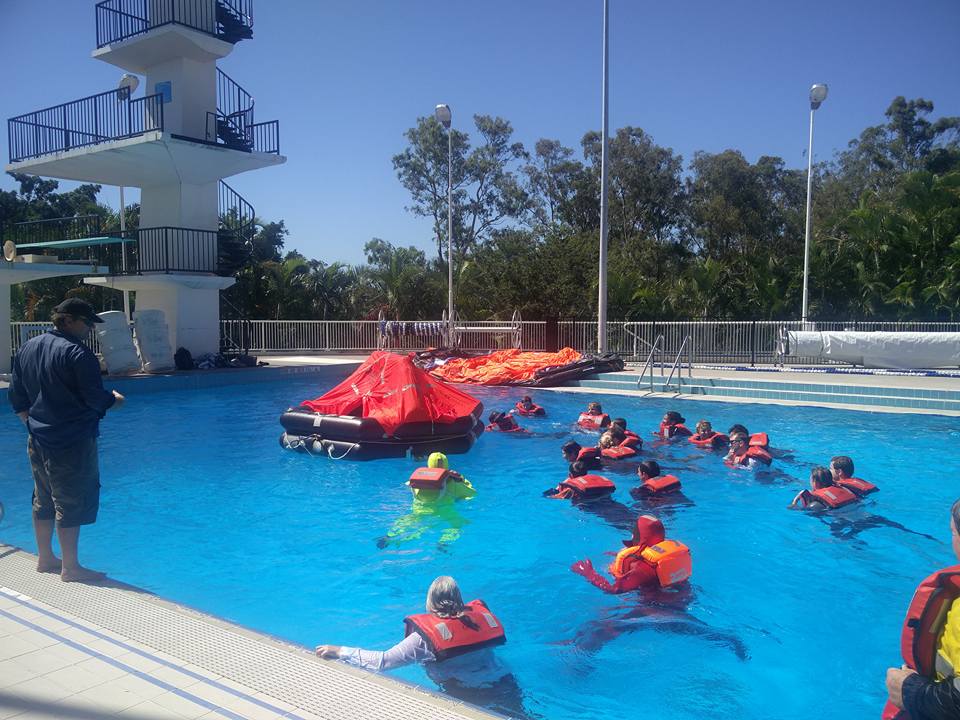
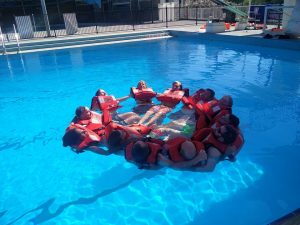
Day 1 – First half of the day is in the classroom with the afternoon session in the swimming pool, please ensure you bring a change of clothes as you must be fully clothed for the pool activity.

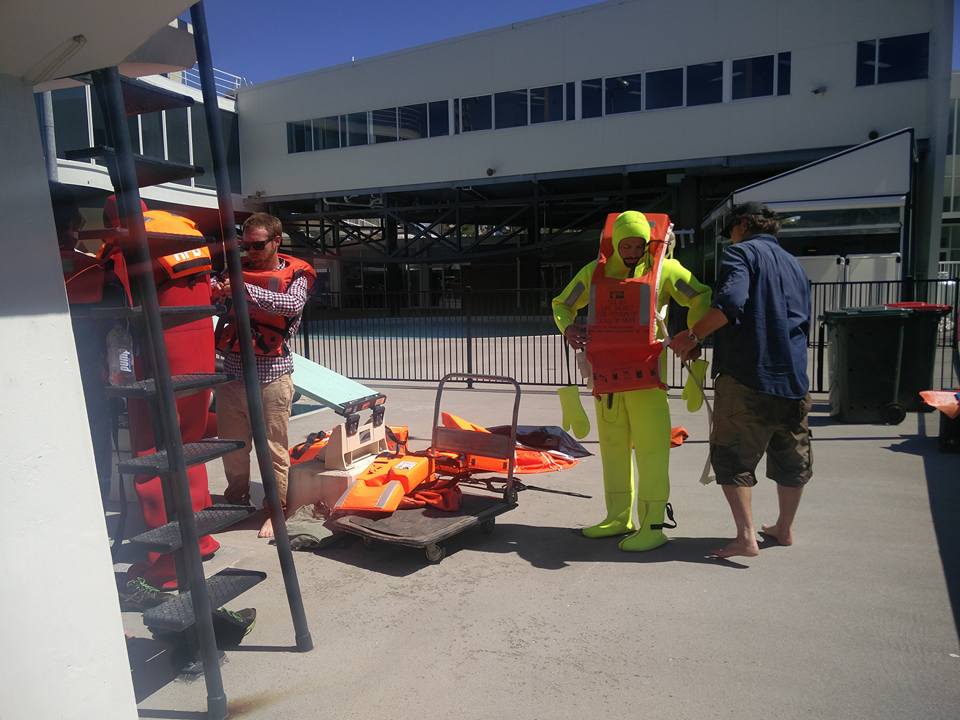
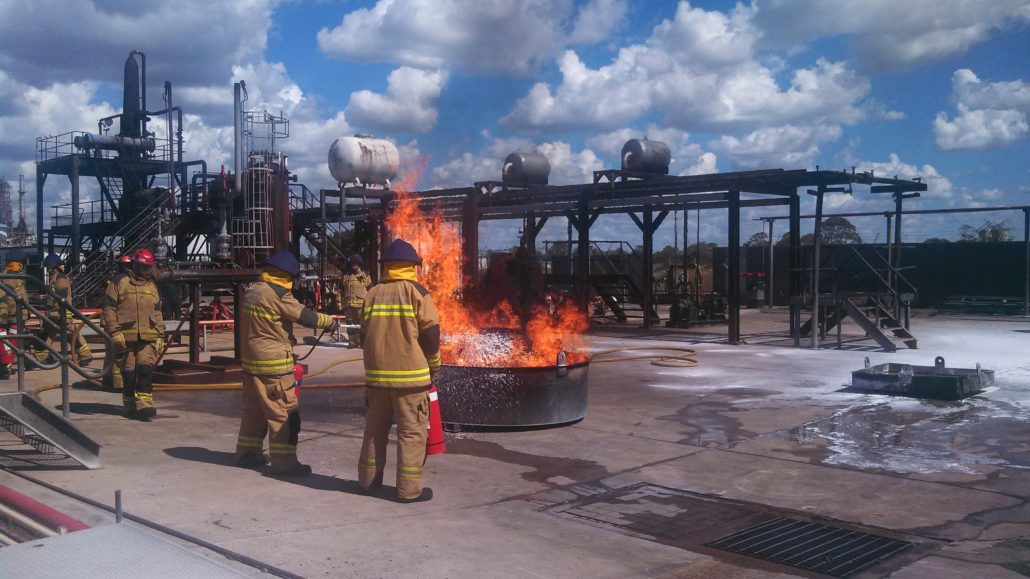
Day 2 – First half day is in the classroom with the second half of the day practical component, firefighting, flare demonstrations and on board a vessel to see all the safety components of a commercially registered vessel. Please make sure you wear long sleeved shirt, long trousers and enclosed shoes.

Duration
The ESS course is delivered over 2 days.

Elements of Shipboard Safety - ESS

Huddle

Course Structure  – Class Times – 8.00 a.m. – 4.00 p.m.

(Please be on time, as class will start at 8.00 a.m.)   

What to bring;

  • Boots/covered in shoes (Day 1 & 2)
  • Sun protection (Day 1 & 2)
  • Swimmers  (Day 1)
  • Towel (Day 1)
  • Long sleeved shirt & trousers (Day 1 & 2)
  • Change of clothes  (Day 1)

To complete the practical assessments throughout the course you will be required to swim, extinguish fires, visit a commercially registered vessel and activate a hand held flare. Please let us know if you have any issues with any of these practical components of the course.

ENROL NOW

Master <45M / Master 4

Licensing/Regulatory Information

Master 35M

This level of qualification is currently cited as meeting some of the requirements for certification as a Master up to 45 metres Near Coastal as defined by Marine Order 505 (Certificates of competency – National law) 2022.

For a full Certificate of Operation from AMSA as a Master <45 metres Near Coastal, you will require;

  • MAR40320 Certificate IV in Maritime Operations – Master <45 metres Near Coastal,
  • Master <24 metres Near Coastal licence,
  • an appropriate radio certificate of proficiency,
  • Australian Maritime Safety Authority (AMSA) final oral assessment
  • and an AMSA approved first-aid certificate.

People seeking certification should check with AMSA.

Pre-requisites to receiving your certificate

  • Current first-aid certificate
  • Elements of Shipboard of Safety
  • Marine Radio license
  • A completed task book
  • or a copy of your sea time application – This is a part of our Delivery and Assessment Strategy; without this, the course would be triple the time and cost.

Delivery

Virtual Classrooms via Zoom

Virtual Classrooms sessions run the same as attending classes except delivered via Zoom. Classes run six days a week, including Saturdays; each day starts at 0800 and finishes at 1600.

There are allocated course durations for all courses; however, depending on the group, You may complete it sooner.

It is your responsibility to complete your assignments, preferably during the course or prior, if possible.

You need to advise as soon as possible if you cannot attend a class and must catch up in your own time.

Each subject holds practical assessment components as part of the maritime training package, so students MUST Brisbane to complete this.

We cannot issue a certificate without ALL components of the curriculum being satisfied, including the practical assessment.

The practical assessment and AMPA is a collaborative day, so students who choose not to complete their AMPA with us still need to complete their practical assessment.

Remote / Flexible –

If you do not have time to attend classes, you can study remotely via correspondence.

Once you have enrolled and paid for your course fees, you access your student portal, which holds all of the course content and assignments.

You can submit your assignments to your designated assessor and feedback received through the same system.

Remote students are given ten contact hours with their designated assessor to assist them through this process should they need it.

Once Remote students have completed all of their assignments, they will need to contact the office to book their online exams.

As part of the maritime training package curriculum, each course holds a practical assessment component, and students must attend our Brisbane Campus to complete this.

The practical assessment and AMPA is a collaborative day, so students who choose not to complete their AMPA with us still need to complete their practical assessment.

We are unable to issue a certificate without ALL components of the curriculum being satisfied.

Master <35M / Master 4

Licensing/Regulatory Information

Master 35M

This level of qualification meets some of the requirements for certification as a Master <35M Near Coastal as defined by the National Standard for Commercial Vessels (NSCV) Part D.

For a full Certificate of Operation from AMSA as a Master <35 metres Near Coastal, you will require;

  • MAR40320 Certificate IV in Maritime Operations – Master <35 metres Near Coastal,
  • Master <24 metres Near Coastal licence,
  • an appropriate radio certificate of proficiency,
  • Australian Maritime Safety Authority (AMSA) final oral assessment
  • and an AMSA approved first-aid certificate.

People seeking certification should check with AMSA.

Pre-requisites to receiving your certificate

  • Current first-aid certificate
  • Elements of Shipboard of Safety
  • Marine Radio license
  • A completed task book
  • or a copy of your sea time application – This is a part of our Delivery and Assessment Strategy; without this, the course would be triple the time and cost.

Delivery

Virtual Classrooms via Zoom

Virtual Classrooms sessions run the same as attending classes except delivered via Zoom. Classes run six days a week, including Saturdays; each day starts at 0800 and finishes at 1600.

There are allocated course durations for all courses; however, depending on the group, You may complete it sooner.

It is your responsibility to complete your assignments, preferably during the course or prior, if possible.

You need to advise as soon as possible if you cannot attend a class and must catch up in your own time.

Each subject holds practical assessment components as part of the maritime training package, so students MUST Brisbane to complete this.

We cannot issue a certificate without ALL components of the curriculum being satisfied, including the practical assessment.

The practical assessment and AMPA is a collaborative day, so students who choose not to complete their AMPA with us still need to complete their practical assessment.

Remote / Flexible –

If you do not have time to attend classes, you can study remotely via correspondence.

Once you have enrolled and paid for your course fees, you access your student portal, which holds all of the course content and assignments.

You can submit your assignments to your designated assessor and feedback received through the same system.

Remote students are given ten contact hours with their designated assessor to assist them through this process should they need it.

Once Remote students have completed all of their assignments, they will need to contact the office to book their online exams.

As part of the maritime training package curriculum, each course holds a practical assessment component, and students must attend our Brisbane Campus to complete this.

The practical assessment and AMPA is a collaborative day, so students who choose not to complete their AMPA with us still need to complete their practical assessment.

We are unable to issue a certificate without ALL components of the curriculum being satisfied.

ENROL NOW

Master <35M / Master 4

Licensing/Regulatory Information

Master 35M

This level of qualification meets some of the requirements for certification as a Master <35M Near Coastal as defined by the National Standard for Commercial Vessels (NSCV) Part D.

For a full Certificate of Operation from AMSA as a Master <35 metres Near Coastal, you will require;

  • MAR40320 Certificate IV in Maritime Operations – Master <35 metres Near Coastal,
  • Master <24 metres Near Coastal licence,
  • an appropriate radio certificate of proficiency,
  • Australian Maritime Safety Authority (AMSA) final oral assessment
  • and an AMSA approved first-aid certificate.

People seeking certification should check with AMSA.

Pre-requisites to receiving your certificate

  • Current first-aid certificate
  • Elements of Shipboard of Safety
  • Marine Radio license
  • A completed task book
  • or a copy of your sea time application – This is a part of our Delivery and Assessment Strategy; without this, the course would be triple the time and cost.

Delivery

Virtual Classrooms via Zoom

Virtual Classrooms sessions run the same as attending classes except delivered via Zoom. Classes run six days a week, including Saturdays; each day starts at 0800 and finishes at 1600.

There are allocated course durations for all courses; however, depending on the group, You may complete it sooner.

It is your responsibility to complete your assignments, preferably during the course or prior, if possible.

You need to advise as soon as possible if you cannot attend a class and must catch up in your own time.

Each subject holds practical assessment components as part of the maritime training package, so students MUST Brisbane to complete this.

We cannot issue a certificate without ALL components of the curriculum being satisfied, including the practical assessment.

The practical assessment and AMPA is a collaborative day, so students who choose not to complete their AMPA with us still need to complete their practical assessment.

Remote / Flexible –

If you do not have time to attend classes, you can study remotely via correspondence.

Once you have enrolled and paid for your course fees, you access your student portal, which holds all of the course content and assignments.

You can submit your assignments to your designated assessor and feedback received through the same system.

Remote students are given ten contact hours with their designated assessor to assist them through this process should they need it.

Once Remote students have completed all of their assignments, they will need to contact the office to book their online exams.

As part of the maritime training package curriculum, each course holds a practical assessment component, and students must attend our Brisbane Campus to complete this.

The practical assessment and AMPA is a collaborative day, so students who choose not to complete their AMPA with us still need to complete their practical assessment.

We are unable to issue a certificate without ALL components of the curriculum being satisfied.

ENROL NOW